Dragon-sickness
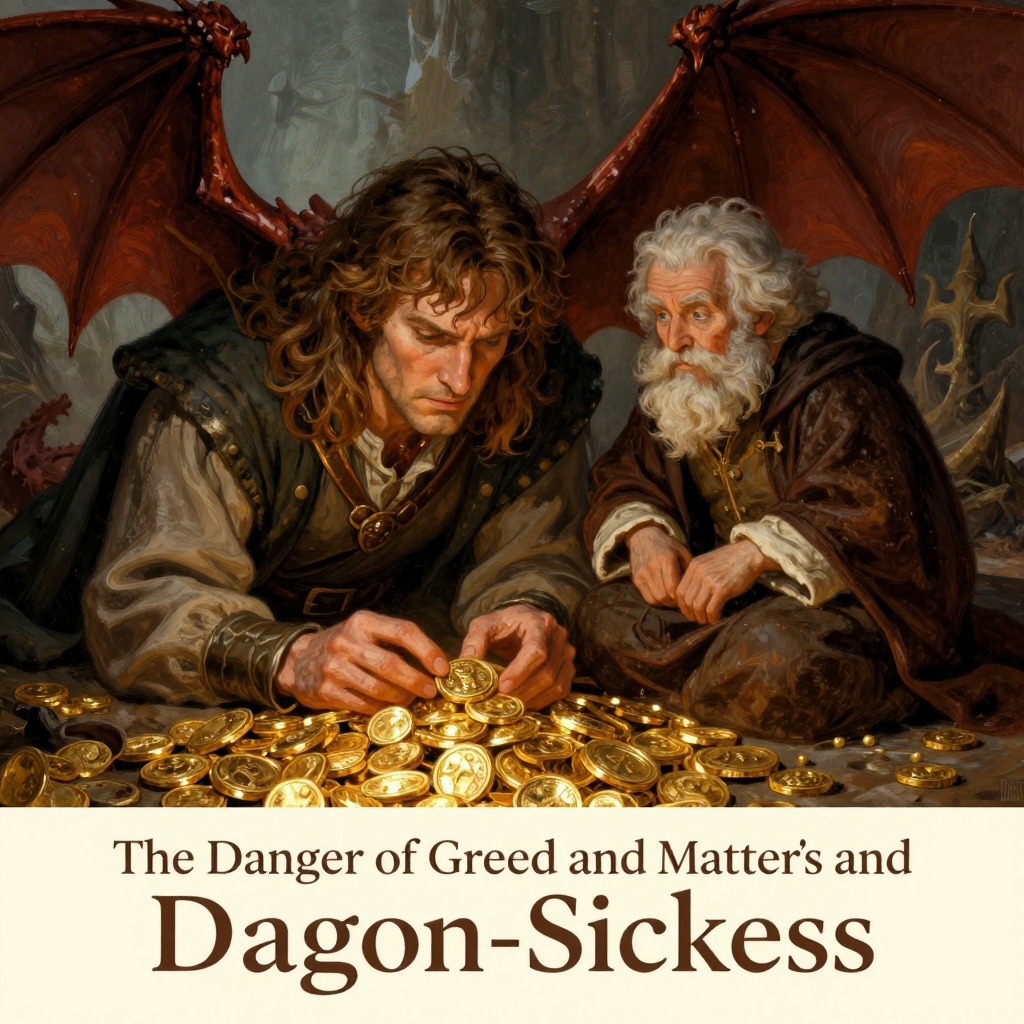
Dragon-sickness is a moral and psychological affliction that overtakes those who come under the spell of a dragon-guarded treasure, manifesting as an obsessive, possessive greed that distorts judgment, erodes loyalty, and ultimately leads to ruin. In The Hobbit, it afflicts Thorin Oakenshield after the death of Smaug, transforming him from a proud but honorable leader into a paranoid, war-mongering figure who values gold above friendship and life itself. The sickness also claims the Master of Lake-town, who steals gold meant for his people and dies alone in the Waste. Bilbo Baggins, by contrast, resists the sickness, choosing modest reward and home over hoarded wealth, a choice that defines his moral victory.
Nature and Origin of the Sickness
Dragon-sickness is not a literal disease but a spiritual corruption born from prolonged proximity to a dragon's hoard. Dragons, as Smaug demonstrates, do not merely guard treasure—they brood upon it, and their malevolent greed seeps into the gold itself. The narrator notes that Thorin, after spending "long hours in the treasury," fell under "the power that gold has upon which a dragon has long brooded." The sickness works through enchantment: the sight of the hoard fills the heart with "the desire of dwarves," a fierce and jealous love of beautiful things made by hands and cunning. This desire can overwhelm reason and conscience, turning even a decent dwarf into a figure of stubborn, violent possessiveness.
Thorin's Transformation
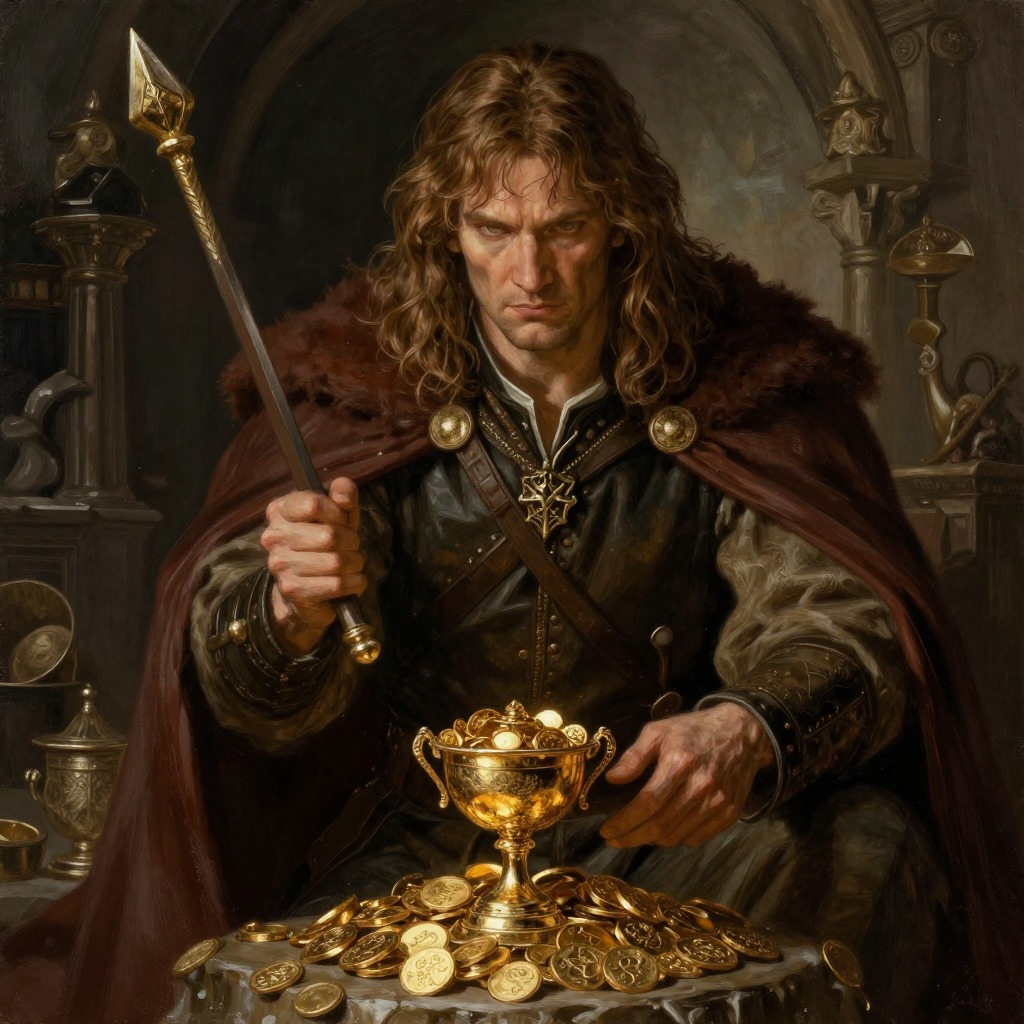
Thorin's descent into dragon-sickness is the most dramatic example in the book. After Smaug's death, Thorin's first act is to barricade himself inside the Mountain, refusing any share of the treasure to the Lake-men who aided him or to the Elves who lost kin to the dragon. When Bard pleads for a portion to rebuild the ruined town, Thorin answers with cold fury: "Nothing will we give, not even a loaf's worth, under threat of force." He shoots an arrow at Bard's messenger, declaring the Mountain besieged. The narrator explicitly states that "the lust of it was heavy on him" and that he was "pondering whether by the help of Dain he might not recapture the Arkenstone and withhold the share of the reward." This paranoia and willingness to break his word mark a complete reversal from the proud but principled leader who set out from Bag-End.
The Arkenstone as Catalyst
The Arkenstone, the Heart of the Mountain, becomes the focal point of Thorin's sickness. He names it to himself "beyond price" and threatens vengeance on anyone who withholds it. When Bilbo secretly gives the gem to Bard to use as a bargaining chip, Thorin's rage is volcanic: he seizes Bilbo, calls him a "descendant of rats," and orders him thrown from the wall. The sickness has so consumed him that he cannot see the justice of Bard's claims or the loyalty of his hobbit companion. Only on his deathbed, after being mortally wounded in the Battle of Five Armies, does Thorin break free of the sickness. He tells Bilbo, "I go now to the halls of waiting to sit beside my fathers, until the world is renewed. Since I leave now all gold and silver, and go where it is of little worth, I wish to part in friendship from you." His final words—"If more of us valued food and cheer and song above hoarded gold, it would be a merrier world"—are a direct repudiation of the sickness that had possessed him.
The Master of Lake-town's Fate
A secondary but telling case of dragon-sickness is the Master of Lake-town. After Smaug's fall, Bard gives him much gold for the help of the Lake-people. But the Master, "being of the kind that easily catches such disease," falls under the dragon-sickness himself. He takes most of the gold and flees with it, only to die of starvation in the Waste, deserted by his companions. His end mirrors the moral logic of the sickness: greed that isolates and consumes its host, leaving nothing but ruin.
Bilbo's Resistance
Bilbo Baggins stands as the clearest counterexample to dragon-sickness. Though he feels the "enchantment" of the treasure and the "desire of dwarves" when he first sees Smaug's hoard, he never loses his moral compass. He takes only a single cup on his first visit, and later, when he finds the Arkenstone, he hides it not for personal gain but to use as a bargaining chip to prevent war. He gives the gem to Bard, saying, "I am willing to let it stand against all my claim." When offered a vast share of the treasure, he refuses, taking only two small chests—"as much as I can manage." His thoughts throughout the siege are of home, of bacon and eggs, of his armchair. The narrator notes that "the enchanted desire of the hoard had fallen from Bilbo" early on, and he remains immune to the sickness that corrupts Thorin and the Master.
Thematic Significance
Dragon-sickness functions as a moral test that separates the worthy from the corrupted. It is a form of spiritual death that precedes physical death, a warning against the idolatry of wealth. Thorin's redemption comes only when he renounces the gold on his deathbed; the Master's damnation is sealed by his inability to do so. Bilbo's immunity is not a matter of superior virtue but of a different set of values: he values comfort, friendship, and home over treasure. The sickness thus serves as the book's central moral axis, proving the premise that hoarded gold, when loved for its own sake, destroys the lover. The final peace of the North—the rebuilding of Dale, the friendship between elves, dwarves, and men—is achieved only after the sickness is purged, and the treasure is used for restoration rather than hoarding.